

More than half of American professionals in urban areas say daily cooking feels rushed and stressful. Juggling work and life rarely leaves time for meals that are nutritious and full of flavor. If you want fast Mediterranean-inspired dishes that support your lifestyle, this guide will show exactly how to transform your kitchen routine using smart tools, easy meal prep strategies, and quality-focused cooking techniques.
Table of Contents
Quick Summary
| Essential Insight | Explanation |
| 1. Stock Your Kitchen Wisely | Equip your kitchen with versatile tools and staple ingredients to streamline meal preparation time and efficiency. |
| 2. Implement Simple Menu Planning | Create Mediterranean-style menus that share ingredients, reducing shopping time and maximizing meal variety throughout the week. |
| 3. Organize Meal Prep Efficiently | Dedicate time to prep ingredients in advance, using a structured system to minimize cooking time and enhance weeknight meal assembly. |
| 4. Master Quick Cooking Techniques | Use methods like stir-frying and sheet pan meals to prepare healthy dishes quickly without sacrificing flavor or quality. |
| 5. Assess Meal Quality and Presentation | Evaluate meals for nutritional balance and visual appeal to elevate the dining experience while ensuring healthful choices. |
Step 1: Gather essential kitchen tools and ingredients
Preparing quick meals requires having the right equipment and ingredients ready. The secret to efficient cooking starts with a well-stocked kitchen that allows you to move swiftly from prep to plate. Essential kitchen tools can transform your meal preparation from stressful to streamlined.
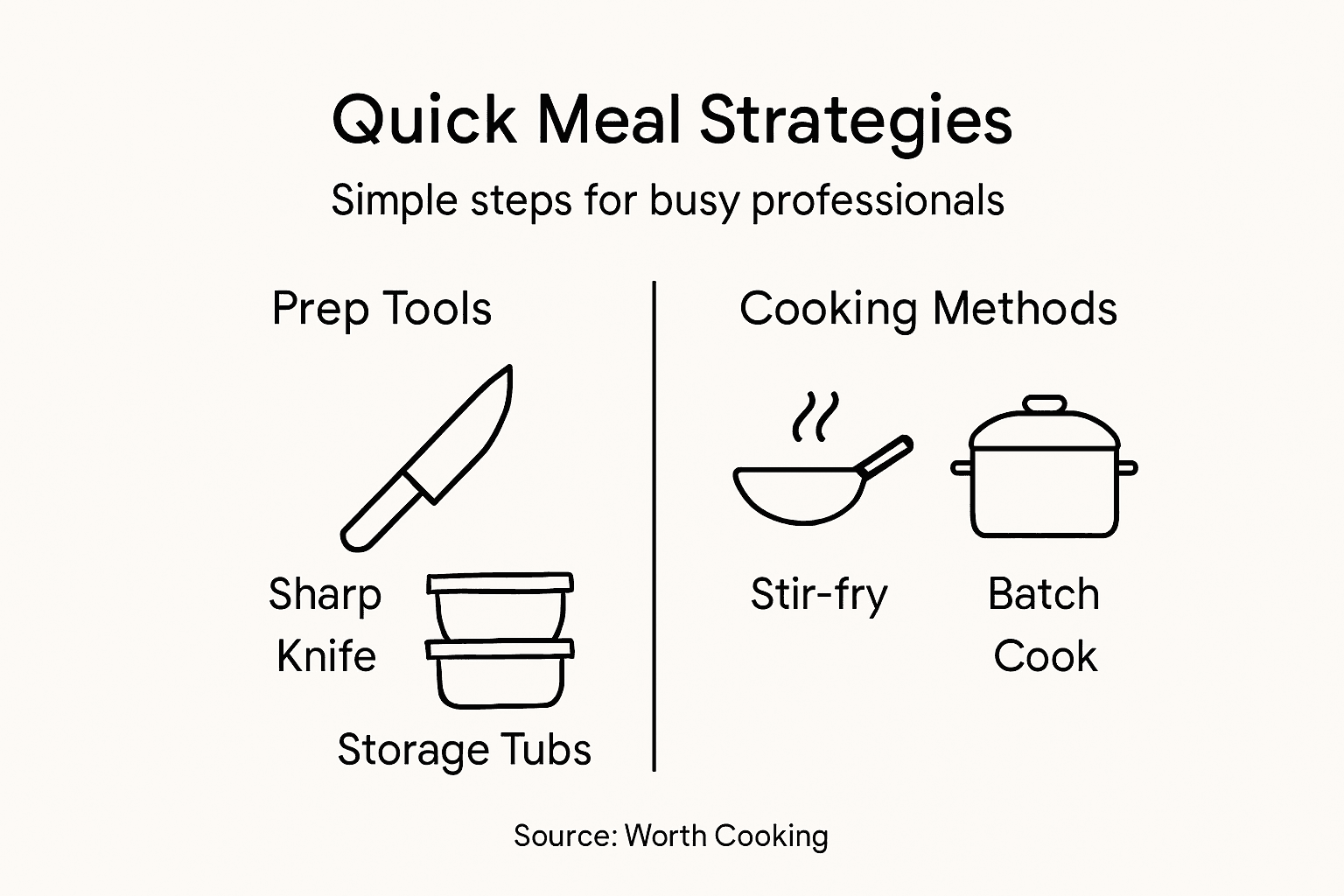
Your core kitchen toolkit should include versatile items that handle multiple cooking tasks. Start with a high-quality non-stick frying pan for quick sauteing, a sturdy saucepan for boiling or simmering, and a set of sharp knives that make chopping a breeze. Add in a reliable cutting board, microwave-safe bowls, and basic measuring tools like a jug and wooden spoon. Reusable food containers are crucial for storing leftovers and prepping ingredients in advance.
When selecting ingredients, focus on versatile staples that work across multiple recipes. Stock your pantry with quick-cooking grains like quinoa, canned beans, olive oil, dried herbs, and spices. Keep your refrigerator stocked with protein sources such as eggs, pre-cooked rotisserie chicken, and canned tuna. Frozen vegetables can be lifesavers for adding nutrition to meals without extensive preparation time.
Pro tip: Invest in multipurpose kitchen tools that save space and reduce cleanup time, like a chef’s knife that can handle multiple chopping tasks or an immersion blender for quick sauces and smoothies.
Step 2: Plan simple Mediterranean-style menus
Creating Mediterranean-style menus requires strategic thinking about flavor, nutrition, and efficiency. When designing quick meals, focus on recipes that blend simplicity with vibrant ingredients. Mediterranean recipes offer incredible versatility for busy professionals seeking delicious and healthy options.
Start by selecting recipes that share common ingredients, minimizing shopping time and reducing food waste. A solid Mediterranean menu might include dishes like Greek chicken skewers, quick vegetable frittatas, or one-pan fish with roasted vegetables. Prioritize proteins like fish, chicken, and legumes, complemented by whole grains and an abundance of fresh produce. Consider preparing base ingredients in advance such as roasted vegetables, cooked quinoa, or marinated proteins that can be quickly assembled into multiple meals.
Think about meal prep efficiency by creating flexible base recipes that can be transformed throughout the week. A batch of roasted chickpeas can become a salad topping one day and a protein-packed snack the next. Batch cooking grains, chopping vegetables, and preparing versatile sauces like tzatziki or hummus on the weekend will dramatically reduce your weeknight cooking time.
Pro tip: Invest in clear storage containers and label them with contents and dates to streamline your meal planning and prevent food spoilage.
Here’s a summary of Mediterranean meal prep strategies and their main benefits:
| Strategy | Description | Main Benefit |
| Batch Cooking | Prepare large amounts of base ingredients at once | Reduces daily cooking time |
| Shared Ingredients | Use overlapping items in recipes | Minimizes shopping and waste |
| Flexible Components | Prepare ingredients usable in multiple meals | Increases menu variety |
| Systematic Storage | Label and organize all containers | Streamlines meal assembly |
| Advanced Prep | Marinate or cook proteins ahead of time | Speeds up weeknight dinners |
Step 3: Prep ingredients for maximum efficiency
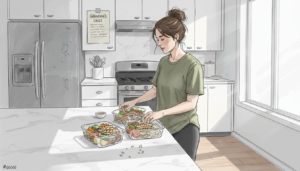
Meal prepping is a game changer for busy professionals who want to eat healthy without spending hours in the kitchen every day. Time-saving meal prep techniques can transform your weekly cooking routine from stressful to seamless.
Start by creating a component system where you simultaneously prepare versatile ingredients that can be mixed and matched throughout the week. Roast a large batch of vegetables, cook multiple protein options like grilled chicken and baked tofu, and prepare base grains such as quinoa or brown rice. The key is creating building blocks that can be quickly assembled into different meals. For instance, roasted vegetables can top a salad one day, become a side dish the next, and get blended into a soup on the third day.

Organization is crucial in efficient meal preparation. Invest in clear storage containers and develop a systematic approach to cooling and storing your prepped ingredients. Always cool hot foods before refrigerating, use airtight containers, and label everything with preparation dates. Group similar ingredients together and create a visual map of your refrigerator and pantry to make meal assembly quick and intuitive.
Pro tip: Dedicate two to three hours on weekends to comprehensive meal prep and watch your weeknight cooking time dramatically reduce.
Step 4: Cook meals using quick techniques
Transforming your cooking routine requires mastering quick cooking techniques that deliver maximum flavor in minimal time. Professional chefs and busy home cooks alike understand that efficiency does not mean compromising on taste or nutritional quality.
Explore multipurpose cooking methods that streamline meal preparation. Stir-frying allows you to cook proteins and vegetables rapidly over high heat, maintaining texture and nutrients. Sheet pan meals offer another smart approach where you can roast an entire dinner on a single tray minimizing cleanup and cooking time. Air frying has emerged as a game changer for creating crispy dishes without excessive oil. Consider techniques like pressure cooking with instant pots that can transform tough ingredients into tender meals in minutes.
Plan your cooking approach strategically by selecting recipes that utilize similar cooking techniques and temperatures. Group ingredients that cook at comparable rates to create efficient one-pot or sheet pan meals. For Mediterranean-inspired dishes, consider techniques like quick sautéing for fish, roasting vegetables with minimal seasoning, and using blender methods for rapid sauces and dressings that add instant flavor complexity.
Pro tip: Invest in versatile kitchen tools like instant pots and air fryers that can dramatically reduce your cooking time while preserving meal quality.
Compare these quick cooking techniques to find the best fit for your meals:
| Technique | Speed | Cleanup Required | Ideal For |
| Stir-frying | Very fast | Minimal | Vegetables and thin meats |
| Sheet Pan Roasting | Moderate | Single tray | Full meals, root vegetables |
| Air Frying | Fast | Easy | Crisp textures, snacks |
| Pressure Cooking | Fastest | Single pot | Tough cuts, grains |
| Quick Sautéing | Very fast | Minimal | Fish, leafy greens |
Step 5: Check meal quality and presentation
Evaluating your homemade meals goes beyond simple taste testing. Meal quality assessment requires a comprehensive approach that considers nutritional balance, visual appeal, and overall dining experience.
Start by analyzing your meal through multiple lenses. Visually inspect the plate for color variety and balanced portion sizes. Mediterranean cuisine thrives on vibrant ingredients that create natural color palettes combining greens, reds, yellows, and browns. Check protein portions for appropriate serving sizes and ensure vegetables occupy at least half your plate. Texture variety matters as much as color contrast aim for combinations that provide crunch, softness, and diverse mouthfeels within a single dish.
Consider the nutritional profile alongside aesthetic presentation. A well-composed plate should offer a spectrum of nutrients including lean proteins, complex carbohydrates, healthy fats, and abundant vegetables. Use garnishes strategically to enhance both visual appeal and nutritional value herbs like parsley or mint can add brightness while contributing additional micronutrients. Arrange components thoughtfully allowing each ingredient to shine while creating an inviting overall composition.
Pro tip: Take a quick smartphone photo of your plated meal to objectively assess presentation and make improvements for next time.
Master Quick and Healthy Cooking with Mediterranean Flair
Struggling to find the time and tools to prepare healthy, flavorful meals amid a busy schedule is a common challenge for many professionals. This article highlights key strategies like batch cooking, efficient meal prep, and quick cooking techniques designed to reduce your time in the kitchen without sacrificing taste or nutrition. If you want to overcome those daily cooking hurdles and bring vibrant Mediterranean-inspired dishes to your table, we have you covered.
Visit Worth Cooking to explore a rich collection of easy-to-make Mediterranean recipes, smart cooking tips, and culinary inspiration tailored for busy lifestyles. Discover practical guides on kitchen essentials and meal prep hacks that align perfectly with concepts like systematic storage and flexible components mentioned in the article. Don’t wait to transform your meal routine—start cooking smarter and eating better today with trusted recipes and resources designed for professionals like you.
Frequently Asked Questions
What essential kitchen tools do I need to prepare quick meals?
To prepare quick meals, invest in essential kitchen tools like a high-quality non-stick frying pan, a sturdy saucepan, sharp knives, a cutting board, and measuring tools. Start by gathering these items to streamline your cooking process and enhance efficiency.
How can I plan simple Mediterranean-style menus for quick meals?
Focus on selecting Mediterranean recipes that share common ingredients to minimize shopping and food waste. Create a flexible menu where dishes can be easily assembled with base ingredients prepared in advance, allowing you to enjoy a variety of meals throughout the week.
What are some effective meal prep strategies for busy professionals?
Implement meal prep strategies like batch cooking and systematic ingredient storage to enhance efficiency. Set aside two to three hours on weekends to prep ingredients, which can reduce your weeknight cooking time significantly.
What quick cooking techniques can I use to save time?
Utilize quick cooking techniques such as stir-frying, sheet pan roasting, and pressure cooking to prepare flavorful meals in minimal time. Choose recipes that align with these methods to further streamline your cooking process and maintain the quality of your meals.
How can I ensure the quality and presentation of my quick meals?
Evaluate your meals by checking for color variety, portion sizes, and nutritional balance. Aim to create visually appealing plates with a mix of textures and colors to enhance the dining experience and encourage healthy eating habits.